Flatiron Building opens to residents for the first time
Closings have begun at 175 Fifth Avenue, and the Flatiron Building has residents for the first time in its 124-year history — 36 homes in Daniel Burnham's 1902 triangular landmark, with remaining three- and four-bedroom residences from $14.85M.
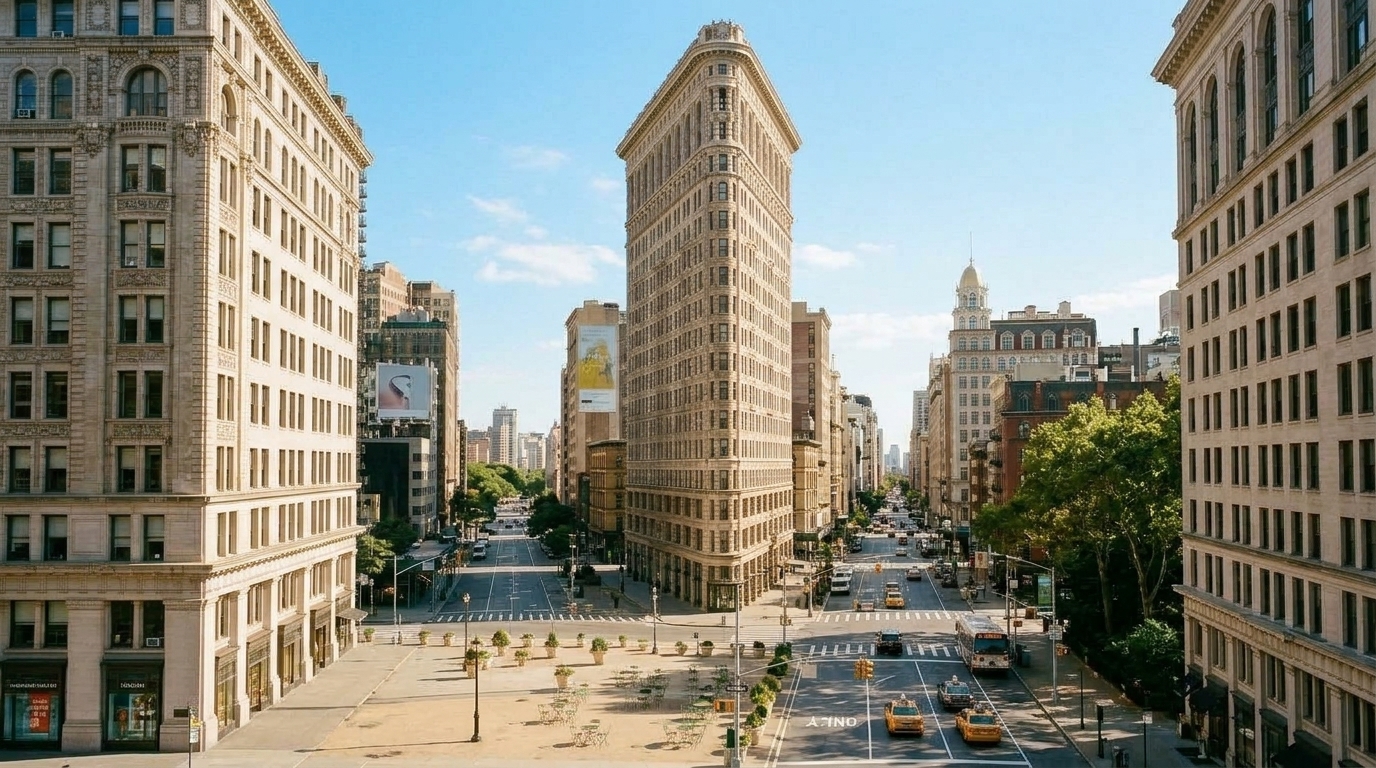
For the first time in its 124-year history, the Flatiron Building has residents. The Brodsky Organization announced last week that closings have begun at 175 Fifth Avenue, and the first buyers are moving into the triangular landmark following its conversion from offices into 36 homes. The building that has been a postcard for more than a century is now, at last, a place where people live.
The building was designed by Chicago architect Daniel Burnham and completed in 1902 as the Fuller Building, named for the George A. Fuller Company, its original tenant. Its 22-story steel frame, clad in limestone and terra-cotta, rises 285 feet from the wedge where Fifth Avenue, Broadway, and 23rd Street meet, and the prow has made it one of the most photographed buildings in the world. It spent its whole life as offices. Its last major tenant, the publisher Macmillan, left in 2019, and the building stood largely empty while its owners resolved a dispute over its future.
The conversion, led by the Brodsky Organization with the Sorgente Group, took the building down to its essence: the exterior walls and the structural columns stayed, and nearly everything else was rebuilt. More than 1,000 windows were replaced to preservation standards, and thousands of terra-cotta fixtures were restored, each piece hand-replicated by a California manufacturer. Interiors by Studio Sofield, the practice of AD100 designer William Sofield, draw on materials uncovered during the restoration, historic ironwork, railings, and marble mosaics, and the wedge-shaped floor plates became one north-facing and one south-facing home per level, with a handful of full-floor residences. The building is also lit at night for the first time in its history.
This is an opening, not a listing, and the distinction matters. A full-floor residence at the Flatiron is separately on the market at $53.5M, and that listing has had its own story. The news here is the threshold: 36 homes where there were none, in a building that had never housed anyone. Remaining three- and four-bedroom residences start at $14.85M, and the full amenity collection, including a 60-foot lap pool, follows in early 2027. The homes were largely spoken for before the doors opened; sales reports counted 18 of 22 publicly listed units sold by August, before a single resident had moved in.
The Flatiron's conversion is also the most visible test of a question New York keeps asking: what happens to the great office buildings when the offices leave. The answer, in this case, is that the landmark stays a landmark and gains a second life, the same prow, the same terra-cotta, now with lights on at night and people coming home to it. A building that spent 124 years as an image is finally inhabited, and that is the story.