Charlie Parker's Avenue B home enters contract at $6.2M
The Gothic Revival rowhouse at 151 Avenue B, where Charlie Parker lived with his family from 1950 to 1954 at the height of bebop, has entered contract at $6.2 million. It is one of the rare New York landmarks designated for its cultural value — and the block is named for him.
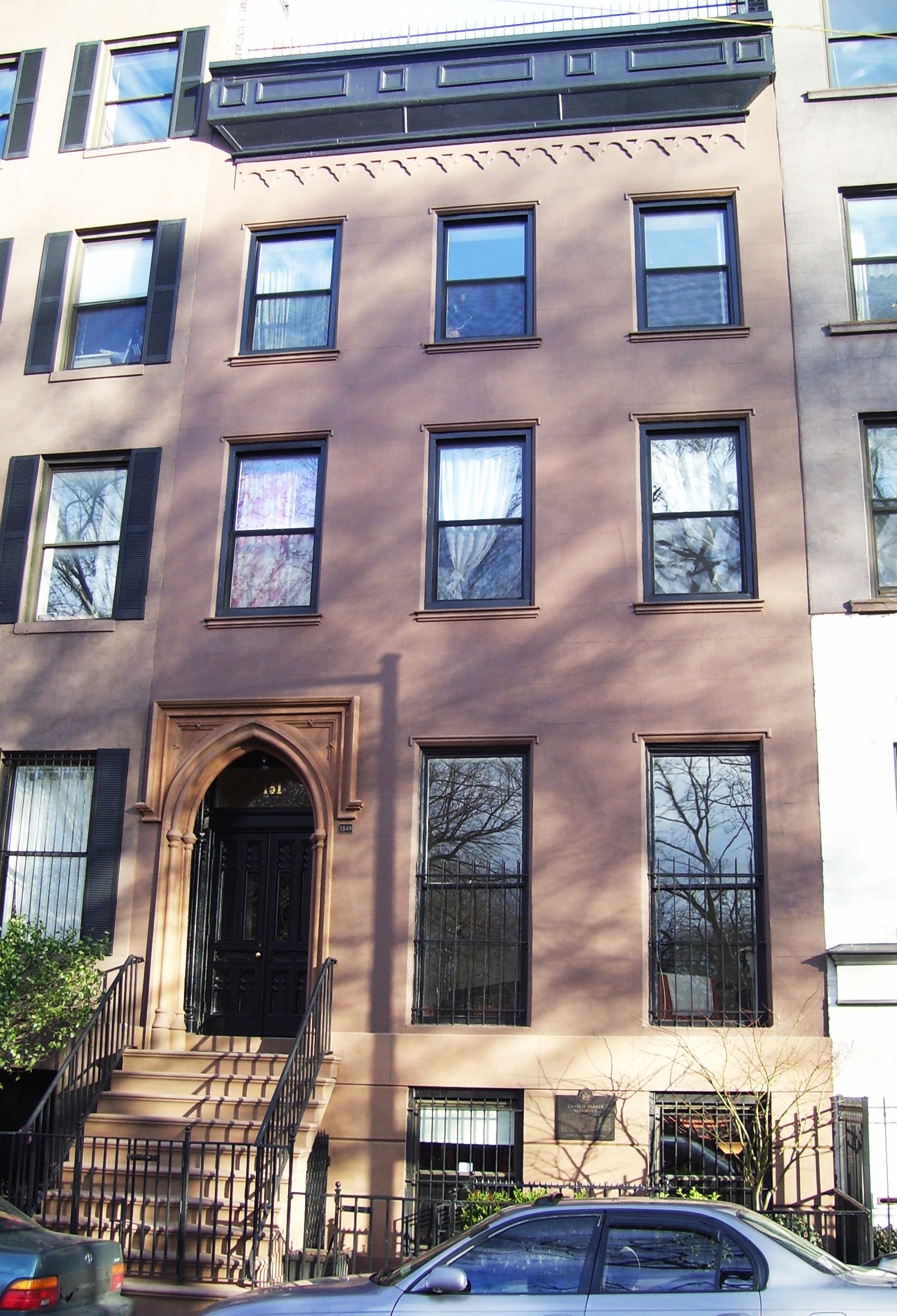
The townhouse at 151 Avenue B, where Charlie Parker lived with his family from 1950 to 1954, has entered contract at $6.2 million. The four-unit house across from Tompkins Square Park was listed in the fall of 2025 at $7.85 million and cut to $6.2 million in July 2026; the contract was signed October 27, 2026. It went on the market after the death, early in 2025, of Judith Rhodes, the jazz promoter who bought the building in 1979 and lived in Parker's old apartment.
The house is older than the jazz it sheltered. Built in 1849 as a single-family Gothic Revival rowhouse, one of the earliest buildings raised across from Tompkins Square Park, it has a pointed-arch entrance with clustered colonettes and a hood mold — the detail the Landmarks Preservation Commission called the building's most significant architectural element when it designated the house. It was split into apartments after 1880, served as the Bryson Day Nursery in 1906, and gained a rooftop penthouse in 1945.
Parker moved into the ground-floor apartment — the raised basement, directly across from the park — in late 1950 with his wife, Chan Richardson, at the height of his career. He had arrived in New York in 1938 or 1939, and by 1950 he was 30, already the co-creator of bebop with Dizzy Gillespie, and the four years on Avenue B were, by most accounts, the closest he came to stability. More than half of the recordings he made as a leader were cut in those four years. He left in October 1954 and died the following March, at 34.
The building's landmark status is unusual: it was designated in 1999 not for its architecture alone but for its cultural value — the only East Village rowhouse east of Second Avenue to be designated, and a rare case of the commission honoring a building for the music made inside it. It joined the National Register of Historic Places in 1994, and the block of Avenue B between 9th and 10th Streets is co-named Charlie Parker Place. Rhodes, who bought the house in 1979, campaigned for the designation and lived in Parker's apartment herself.
The contract is the peg; bebop is the piece. A house the city protects because of four years of music is about to change hands for the first time in nearly half a century — and the saxophone's old address, across from the park, stays exactly where it has always been.